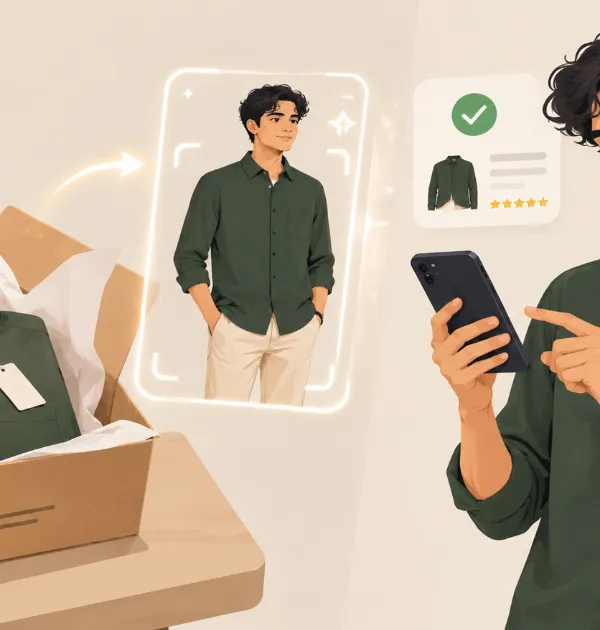
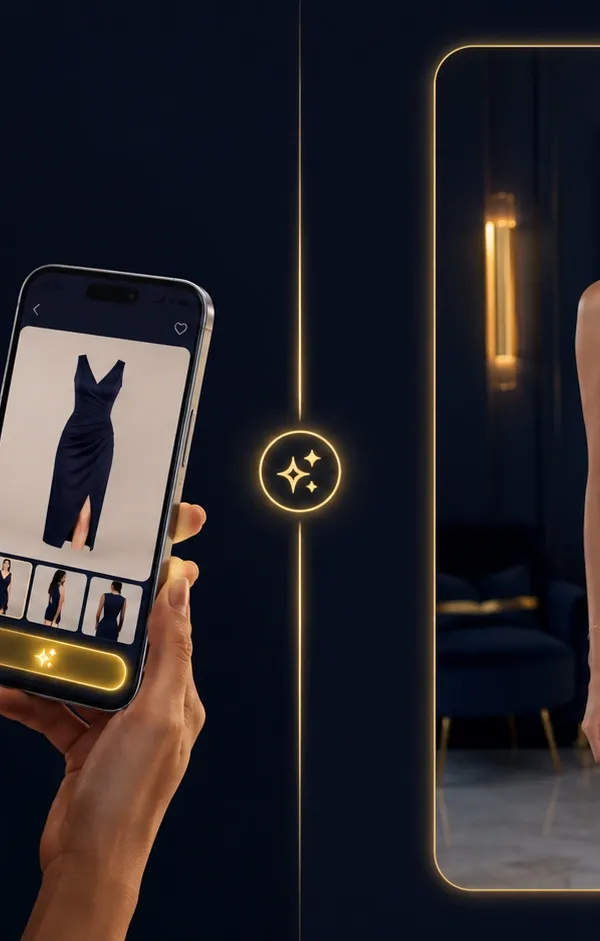
How AI Virtual Try-On Is Transforming Fashion E-commerce
Discover how AI virtual try-on is transforming fashion e-commerce by making online shopping more visual, interactive, personalized, and engaging for fashion brands and Shopify merchants.
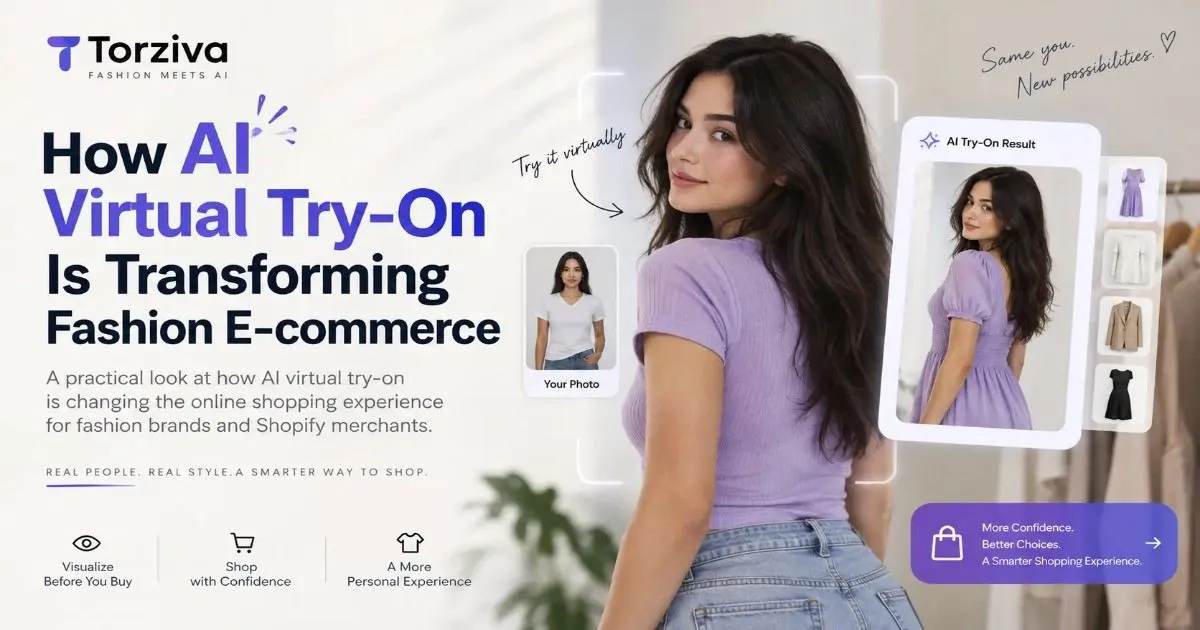
Online fashion shopping has become increasingly visual. Shoppers can browse hundreds of products, zoom into product images, watch videos, and compare styles within minutes. Yet one fundamental challenge remains: seeing a product online is not the same as imagining how it will look on you.
A customer may like a shirt, dress, jacket, or pair of trousers in a product image but still hesitate before buying because they are unsure how the item will look with their body, appearance, or personal style.
This is where AI virtual try-on is becoming an interesting part of the modern fashion e-commerce experience. Instead of relying only on traditional product photography, brands can give shoppers an opportunity to visualize how a product could look on them before making a purchase.
For fashion brands and Shopify merchants in particular, this creates a new way to make product discovery more interactive while helping shoppers make more informed decisions.
Why Fashion E-commerce Has a Visualization Problem
Traditional e-commerce product pages usually depend on a combination of product photography, model photography, descriptions, size charts, and customer reviews.
These elements are important, but they do not completely answer one of the most natural questions a shopper has:
“How will this look on me?”
A professional model wearing a garment can communicate its style, color, and overall appearance. However, shoppers have different body types, proportions, hairstyles, skin tones, and personal preferences. A product that looks appealing on a model may still be difficult for a customer to visualize on themselves.
This uncertainty can influence the buying decision.
Some shoppers may leave the product page without purchasing. Others may add an item to their cart but continue searching for additional information before completing the purchase.
AI virtual try-on approaches this problem from a different direction. Rather than asking customers to mentally translate a product image into their own appearance, the technology can generate a visual representation of the product on the shopper.
That makes the product experience more personal and interactive.
What Is AI Virtual Try-On?
AI virtual try-on uses artificial intelligence to generate an image showing how a clothing item or other fashion product could appear on a person.
At a basic level, the process combines two important inputs:
An image of the product or garment
An image of the person who wants to try it
The AI system then processes these inputs and generates a new visual representation.
Depending on the technology, the system may need to understand the garment’s shape, colors, patterns, position, and important visual details while maintaining the person’s overall appearance.
The goal is not simply to place one image over another. A useful virtual try-on experience needs to create a result that looks visually coherent enough for the shopper to understand how the garment might appear on them.
This distinction is important because AI-generated visualization should primarily be treated as a visualization tool, rather than an absolute guarantee of physical fit or sizing.
How AI Virtual Try-On Changes the Shopping Journey
Traditional fashion shopping often follows a relatively simple path:
Discover a product → View product images → Read details → Decide whether to buy
AI virtual try-on adds another interactive step:
Discover → View product → Try it virtually → Visualize → Compare → Decide
That additional interaction can make the product page more engaging.
For Shopify merchants looking to bring this experience directly into the shopping journey, solutions such as Torziva can help integrate AI-powered virtual try-on into the product experience, allowing shoppers to visualize products before making a purchase decision.
The important part is not simply adding a “Try On” button. The entire experience should feel like a natural extension of shopping rather than a separate tool that interrupts the customer journey.
A shopper should be able to understand what the feature does, upload an appropriate image, generate a result, and continue exploring the product without unnecessary friction.
Potential Benefits for Fashion Brands
AI virtual try-on can offer several potential benefits for fashion e-commerce brands.
1. Better Product Visualization
Product photography can show how an item looks on a professional model, but virtual try-on gives shoppers another perspective.
Seeing a garment represented on their own image can make it easier for them to imagine owning and wearing the product.
2. A More Interactive Product Page
Many e-commerce product pages follow a familiar structure: images, description, price, variants, reviews, and an add-to-cart button.
Virtual try-on introduces an interactive element into this experience.
Instead of simply looking at another image, the customer can actively participate in the product discovery process.
3. Greater Purchase Confidence
Online shoppers often have uncertainty before purchasing fashion products.
Virtual try-on cannot remove every uncertainty, but it can provide another piece of information that may help customers evaluate whether a particular style is suitable for them.
This can be particularly useful when shoppers are deciding between different colors, styles, or garments.
4. More Personalized Shopping
Personalization has become an important part of digital commerce.
Recommendations can tell shoppers which products they might like. Virtual try-on adds another layer by helping them visualize how a selected product could look on them.
Together, these technologies can make online shopping feel less generic.
5. A More Modern Brand Experience
For fashion brands, the shopping experience itself can become part of the brand.
Thoughtfully implemented AI features can help a store differentiate its product pages and give customers something more engaging than a conventional catalog experience.
Why AI Virtual Try-On Is Especially Interesting for Shopify Stores
Shopify has made it possible for businesses of many sizes to build and operate online stores without developing an entire commerce platform from scratch.
For fashion merchants, however, the product page remains one of the most important parts of the customer journey.
This makes the integration of interactive shopping features particularly interesting.
A virtual try-on experience can potentially sit alongside the existing product information rather than requiring the customer to leave the store.
A simple flow might look like this:
Product page → Upload photo → Generate try-on → Review result → Add to cart
The fewer unnecessary steps between the product and the shopping decision, the more natural the experience can feel.
For merchants, this also means that implementing virtual try-on should involve more than choosing an AI model. The surrounding user experience matters just as much.
What Makes a Good AI Virtual Try-On Workflow?
The quality of the final image is important, but it is only one part of the overall experience.
A successful implementation needs to consider the complete journey, from preparing product images to collecting the shopper’s input and presenting the generated result.
This can include:
Product preparation
Customer image requirements
AI generation
Quality checks
Result presentation
The next action available to the shopper
A structured AI virtual try-on workflow can help connect these individual steps into a more reliable and understandable shopping experience.
For merchants, thinking about the workflow also makes it easier to identify where customers might experience friction.
For example, unclear image-upload instructions can create poor inputs. A complicated generation process can cause shoppers to abandon the experience. And even a good AI-generated result may have limited value if the customer cannot easily return to the product page and continue shopping.
The technology and the user experience therefore need to work together.
What Brands Should Consider Before Adding Virtual Try-On
Before adding AI virtual try-on to an online store, brands should consider several practical factors.
Product Image Quality
The AI system needs useful product inputs. Clear images with visible garment details can make it easier for the system to understand what it needs to represent.
Brands should also maintain consistent product imagery across their catalog where possible.
Customer Image Requirements
Shoppers need clear instructions about what type of photo to upload.
For example, the experience might explain whether the customer should use a full-body image, a particular pose, good lighting, or a clear background.
Good instructions can reduce failed generations and make the experience less confusing.
Visual Accuracy
AI-generated images can sometimes alter details such as garment shape, patterns, textures, or other visual characteristics.
Brands should therefore think carefully about how they communicate the feature and set appropriate expectations.
The objective is to create a useful visualization while preserving the important characteristics of the original product.
User Experience
A customer should not need technical knowledge to use a virtual try-on feature.
The interface should make each step obvious:
Choose a product
Upload a photo
Generate the result
View the result
Continue shopping
Clear feedback during processing is also important. If generation takes some time, the interface should communicate that something is happening rather than leaving the customer wondering whether the feature has stopped working.
Mobile Experience
Fashion shopping happens across devices, so virtual try-on should work well on smaller screens too.
Buttons, image-upload controls, generated results, and product information should remain easy to use on mobile.
A feature that looks impressive on desktop but feels difficult to operate on a phone can create unnecessary friction.
Customer Privacy
Because virtual try-on may require customers to upload personal images, privacy should be considered from the beginning.
Brands should clearly communicate how uploaded images are handled and follow applicable privacy requirements.
Trust is particularly important when introducing AI features that process customer-provided images.
Virtual Try-On Is Not the Same as Size Prediction
One of the most important distinctions brands should communicate is the difference between visualization and physical fit.
AI virtual try-on primarily answers a question such as:
“How might this garment look on me?”
Size prediction answers a different question:
“Which size is likely to fit me correctly?”
These are related but separate problems.
A generated image can help a shopper visualize the appearance of a garment without guaranteeing how tight, loose, long, or short the actual physical item will feel.
Brands should therefore avoid presenting virtual try-on as a replacement for accurate size charts, measurements, fit information, or customer reviews.
Instead, it can complement those existing tools.
When these elements work together, shoppers can receive both visual context and practical product information before purchasing.
How Brands Can Measure Whether Virtual Try-On Is Working
After launching a virtual try-on experience, merchants should evaluate more than the number of people who click the button.
Useful metrics can include:
Try-on button clicks
Photo-upload completion rate
Successful generation rate
Time required to generate a result
Number of completed try-on sessions
Add-to-cart activity after try-on
Conversion behavior
Repeat usage
Customer feedback
These measurements can help brands identify where improvements are needed.
For example, a large number of clicks but a low upload completion rate could indicate that the upload process is confusing.
Similarly, customers may successfully generate images but rarely continue to the cart. That could suggest that the result page or next step needs improvement.
The goal should not simply be to add AI to a store. The goal should be to understand whether the feature is actually improving the shopping experience.
The Future of AI-Powered Fashion E-commerce
Virtual try-on is only one part of a much larger shift toward AI-powered fashion commerce.
Product photography is becoming increasingly automated. AI-generated fashion models can help brands create different visual variations. Recommendation systems can personalize product discovery. Visual search can help shoppers find products using images rather than keywords.
AI shopping assistants may also help customers discover products, answer questions, and navigate catalogs through natural language.
Over time, these technologies may become increasingly connected.
Imagine a fashion store where a customer can describe the style they want, receive personalized product recommendations, generate a virtual try-on, compare several looks, and move directly to checkout, all within one shopping experience.
The most successful implementations will likely not be the ones that simply add the largest number of AI features.
Instead, they will be the ones that use AI to solve specific customer problems while keeping the shopping experience simple.
Conclusion
AI virtual try-on is changing the way fashion products can be presented online.
Traditional product photography will continue to play an important role, but interactive visualization gives shoppers another way to understand a product before purchasing.
For fashion brands and Shopify merchants, the opportunity is not simply to offer an impressive AI-generated image. The bigger opportunity is to create a shopping experience that combines product information, visual confidence, personalization, and simplicity.
As AI technology continues to evolve, virtual try-on can become an increasingly useful part of the fashion e-commerce journey.
The brands that approach it thoughtfully, by focusing on image quality, workflow, user experience, privacy, and honest expectations, will be better positioned to turn AI from a novelty into a genuinely useful shopping tool.
Was this article helpful?
Your feedback helps us improve our content quality.
Suman
Verified ContributorFounder & AI E-commerce Writer
Suman is the founder of Torziva, an AI-powered virtual try-on solution for fashion brands and Shopify stores. He writes about AI, fashion technology, and the future of e-commerce.